These two get compared as if they are competing answers to the same question. They are not. They sit at different points in the plumbing and they remove different things, which is why plenty of Central Florida homes end up with both.
Here is what each one actually does, and how to work out which your house needs first.
Reverse osmosis: one tap, the most thorough filtration available
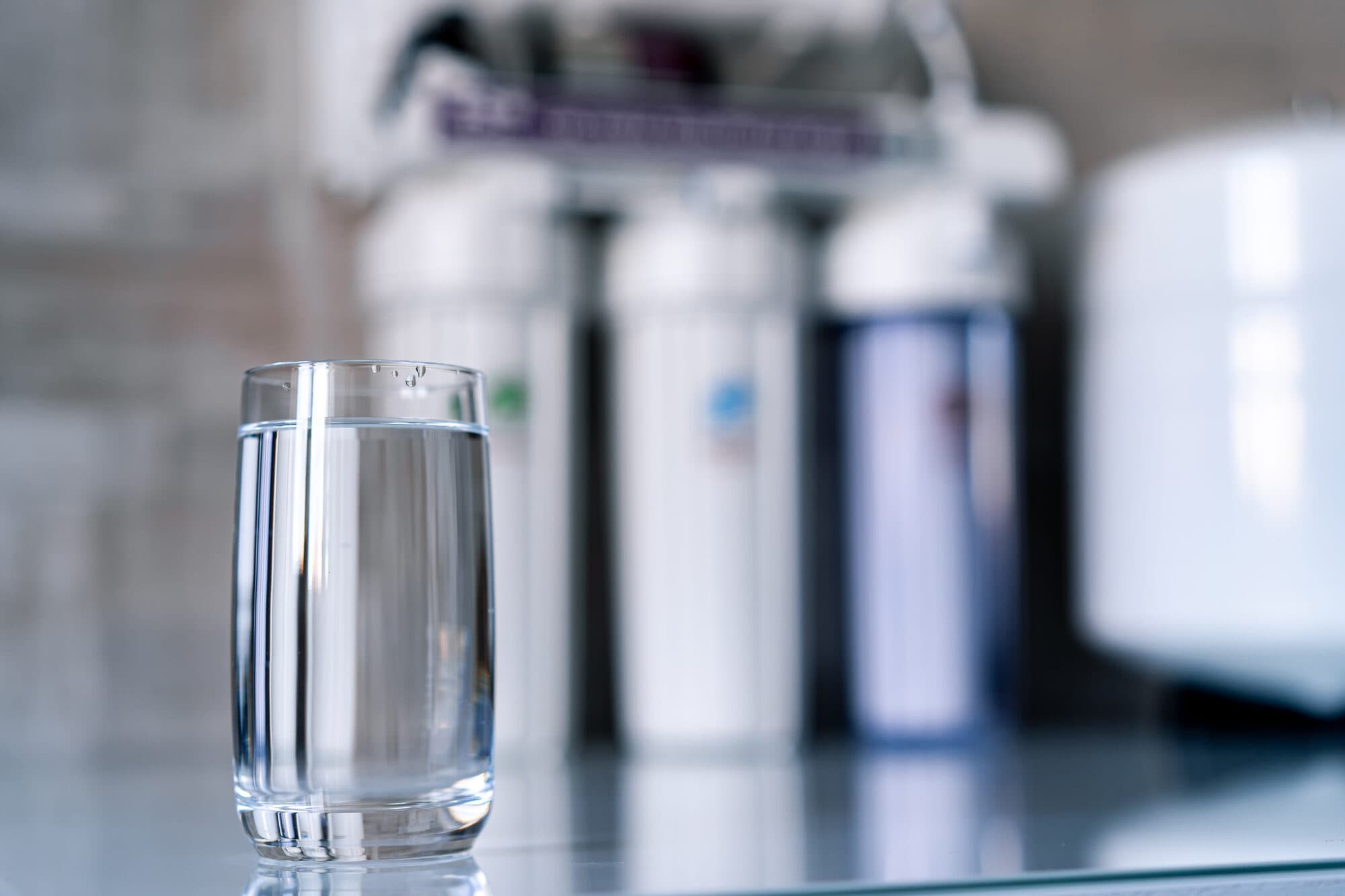
An RO system installs under a sink and feeds a dedicated drinking water faucet. Water is pushed through a series of stages, a sediment pre-filter, a carbon filter, the membrane itself, then a carbon post-filter. The membrane is the part that matters: its pores are small enough that dissolved solids, chemicals and microorganisms cannot pass through. Clean water goes to the faucet and the contaminants are flushed to the drain.
That process removes up to 99% of dissolved contaminants, including lead from old pipe and solder, chlorine and chloramines, fluoride, nitrates, and PFAS. It is one of the few methods that handles fluoride and PFAS effectively.
The trade off is scope. RO treats the water at that one faucet, not the shower, not the laundry, not the water heater.
Whole-home filtration: every fixture, at the point of entry
A whole-home system installs where the water supply enters the house, so everything downstream runs filtered: drinking, cooking, bathing and laundry, from a single installation.
It targets what municipal supply leaves behind. Chlorine and chloramines are added to keep water safe through the distribution network, but they carry a swimming pool taste and smell and they dry out skin and hair with every shower. Ageing distribution lines also shed sediment and rust. Point of entry filtration stops all of that before it reaches a single fixture.
What it does not do is match RO's removal of dissolved contaminants at the drinking tap. Different tool, different job.
Where a softener fits in
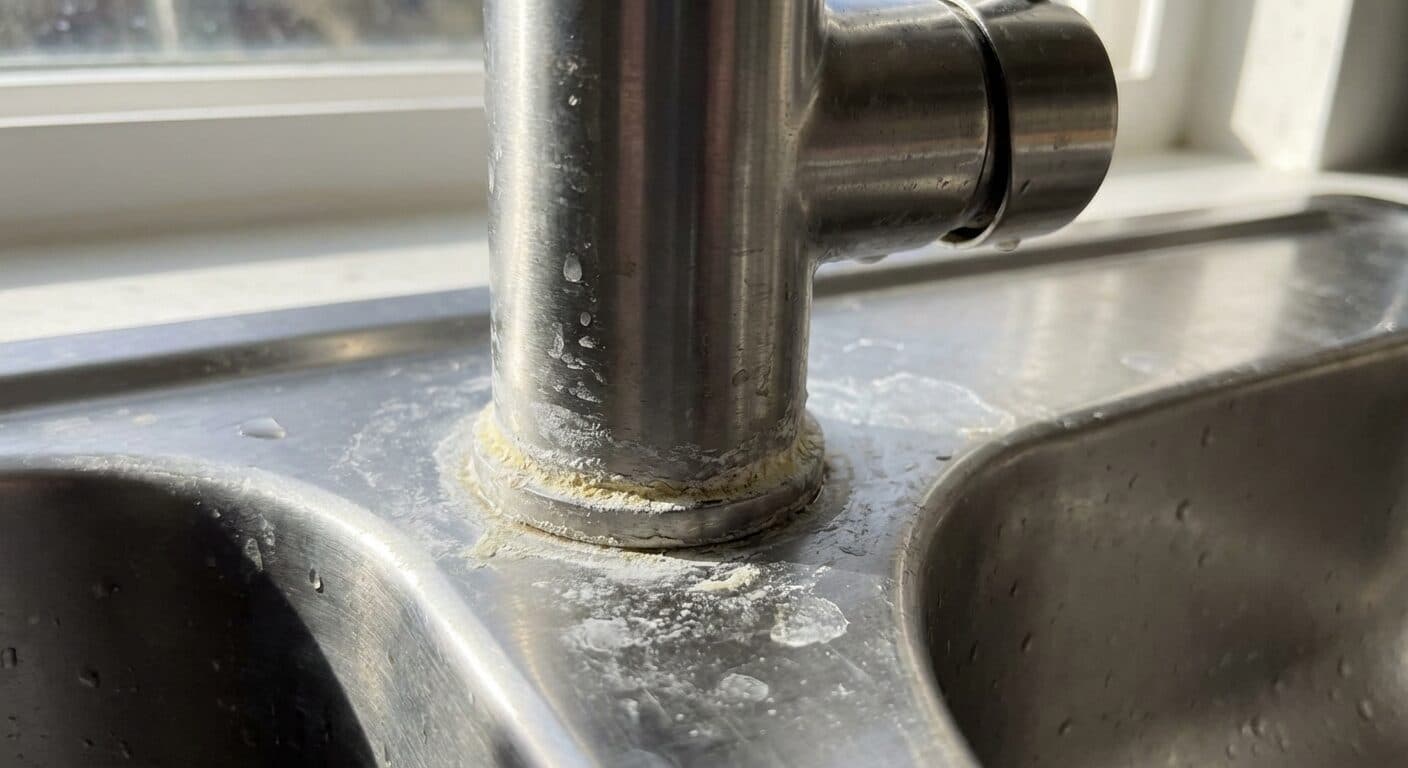
Neither of these is a water softener, and this is the most common point of confusion. A softener removes hardness minerals, calcium and magnesium, through ion exchange. Filtration removes contaminants. On the limestone aquifer that supplies much of Central Florida, hardness is a separate problem that neither filter solves on its own.
How to choose
- Mainly worried about what you drink
- Start with reverse osmosis. It gives you the highest quality water at the tap you actually drink from, for the lowest cost.
- Chlorine smell, dry skin, sediment in the whole house
- Start with whole-home filtration. Those are point of entry problems and no under sink unit will fix them.
- Scale on fixtures and appliances failing early
- Start with a softener. That is hardness, and it needs ion exchange rather than filtration.
- Several of the above
- Many Central Florida homes do need a combination. The order matters, and it depends on what the test results show.
What upkeep looks like
On an RO system, pre-filters and post-filters get changed every 6 to 12 months and the membrane itself typically lasts 2 to 3 years. We service and repair RO systems, so ask us when yours is due.
A properly sized whole-home filter has minimal effect on water pressure. We check the incoming pressure and pipe diameter during the analysis so the system maintains full flow.
The honest answer to which one you need is that it depends on what is in your water, and that takes about half an hour to establish. The analysis is free and there is no obligation attached to it.