Central Florida sits on a limestone aquifer. As groundwater moves through that rock it dissolves calcium and magnesium, and those two minerals are what make water hard. It is not a contamination problem and it will not make anyone ill, but it works its way into every part of a house that touches water.
Hard water rarely announces itself. It shows up as a series of small annoyances that are easy to blame on something else. Here are the five that come up most often.
1. White crust on fixtures and shower doors
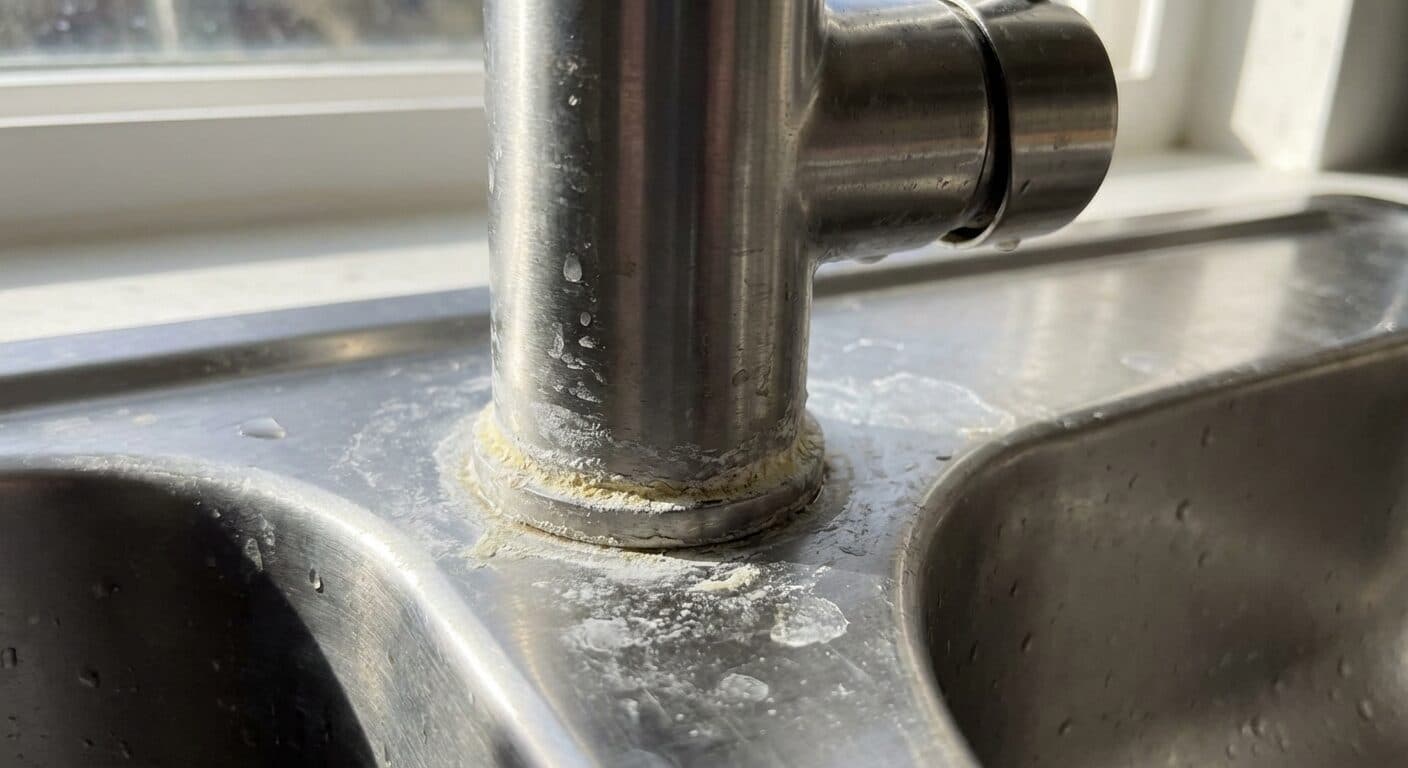
Chalky white deposits around taps, on shower heads and across glass shower doors are scale: calcium and magnesium left behind as water evaporates. If you clean it off and it returns within a week or two, hardness is the cause rather than the cleaning product.
The same deposit forms inside pipes and inside your water heater, where you cannot see it. That is the part that costs money.
2. Soap will not lather properly
Hardness minerals react with soap instead of letting it foam. You end up using noticeably more shampoo, washing up liquid and laundry detergent to get the same result, and a grey film gets left behind on skin, hair and glassware.
Households that switch to soft water commonly cut soap and detergent use substantially, simply because the product finally does what it was designed to do.
3. Spots on dishes that rinsing does not fix
If glasses come out of the dishwasher cloudy or spotted even on a rinse cycle, that is dissolved mineral drying on the surface. Rinse aid masks it. It does not remove the cause.
4. Appliances wearing out early
Water heaters, dishwashers and washing machines all run hard water through heating elements and narrow passages. Scale insulates the element so it works harder, and it narrows the passages so flow drops. The appliance does not fail dramatically, it just quietly reaches the end of its life years earlier than it should.
This is usually the most expensive symptom on the list, and the one homeowners notice last.
5. Dry skin and dull hair
Hard water strips natural oils and leaves soap residue behind on skin and hair. If skin feels tight after a shower, or hair feels coated rather than clean, water chemistry is worth ruling out before another product goes in the cabinet.
How hard is your water, specifically?
Hardness is measured in grains per gallon, and it varies street to street across Central Florida depending on the supply and the depth of the well. Guessing is what leads to a softener that is either undersized and constantly regenerating, or oversized and wasting salt.
A proper test measures hardness alongside iron, pH and total dissolved solids, because those results change what the right system looks like. We size the softener to the household: the number of people, daily water usage and the measured hardness, not a one size fits all guess.
What a softener costs and how long it takes
- Typical installed cost
- A professionally installed whole house water softener generally runs between $1,500 and $3,500 depending on the size of the home, the hardness level and the type of system. You get a firm quote after the water analysis, with no hidden fees.
- Installation time
- Most residential installs take 2 to 4 hours, covering the plumbing connections, bypass valves, drain lines and system setup, with a water test before we leave.
- Ongoing upkeep
- Salt gets topped up periodically depending on household size and hardness. Beyond that a softener is largely unattended.
If two or three of these sound familiar, it is worth measuring rather than guessing. The water analysis is free, takes about 30 minutes, and comes with no obligation.